documentation is required before testing
Before starting any security assessment, proper preparation is essential to ensure that testing activities are effective, controlled, and aligned with organizational goals. Documentation plays a major role in preparing security teams, defining expectations, and avoiding misunderstandings during the assessment process. When organizations provide accurate and complete information before testing begins, security professionals can perform evaluations more efficiently while reducing operational risks.
The first important document required before testing is a clearly defined scope document. This document explains which applications, systems, features, or environments will be evaluated during the assessment. It helps both the organization and the testing team understand the boundaries of the engagement. A well-prepared scope prevents accidental testing of unauthorized systems and ensures that security professionals focus on the areas that require evaluation.
Authorization documentation is another critical requirement before security testing begins. Since testing activities involve analyzing application behavior and attempting controlled exploitation, organizations must provide formal approval that allows security professionals to perform the assessment. This documentation confirms that the testing is authorized and establishes accountability between the organization and the security team.
Information about the target application is also necessary for effective testing. Organizations should provide details such as application URLs, supported platforms, user roles, authentication methods, and major functionalities. Understanding how the application operates allows testers to create realistic testing scenarios and evaluate potential security weaknesses more accurately.
Access details may also be required depending on the scope of the assessment. For applications that include user accounts, organizations may provide test credentials for different user roles. This allows security professionals to evaluate access controls, privilege management, and authentication mechanisms. Properly managed test accounts help ensure that security testing covers both external and authenticated user perspectives.
Architecture documentation can significantly improve the quality of security assessments. Information about application components, databases, APIs, servers, cloud services, and third-party integrations helps testers understand how different elements interact. This knowledge allows security teams to identify potential attack paths and evaluate security risks across the complete application environment.
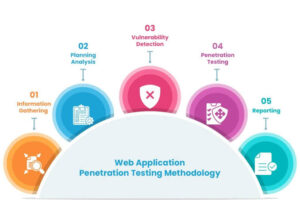
What documentation is required before testing?
During web application vulnerability assessment & penetration testing engagements, detailed documentation helps security professionals understand the application structure, testing requirements, and business context before performing technical evaluations. Providing accurate information ensures that testing activities are targeted, efficient, and aligned with the organization’s security objectives. Without proper documentation, important areas may be overlooked or testing efforts may become less effective.
Organizations should also provide information about the testing environment. Details about whether the assessment will be performed on a production system, staging environment, or dedicated testing environment help security teams plan appropriate methods. If production systems are involved, additional precautions may be required to minimize potential disruption. Clear environment documentation allows testers to choose suitable approaches and avoid unnecessary impact.
Compliance and regulatory requirements should also be documented before testing begins. Many organizations operate under specific security standards that define assessment expectations. Sharing relevant compliance requirements helps testers ensure that the evaluation addresses required controls and provides useful information for audits or regulatory reviews.
Communication details are another important part of pre-testing documentation. Organizations should identify key contacts responsible for security, development, infrastructure, and incident management. Having clear communication channels allows teams to quickly address questions, clarify requirements, and respond to unexpected situations during testing activities.
Rules of engagement documents are commonly prepared before security assessments. These documents define testing timelines, permitted techniques, restrictions, emergency procedures, and reporting expectations. They provide a clear framework for how testing should be conducted and help maintain transparency between all involved parties.
Organizations should also maintain documentation related to previous security assessments if available. Earlier reports, vulnerability findings, and remediation records provide valuable background information. Reviewing previous results helps testers understand recurring issues, verify previous fixes, and identify areas that may require additional attention.
Proper documentation before testing improves the overall effectiveness of security assessments. It helps security professionals understand the environment, define accurate testing strategies, and deliver more meaningful results. Without adequate preparation, assessments may face delays, incomplete coverage, or unnecessary challenges.
A successful security assessment depends not only on technical expertise but also on effective planning and information sharing. By preparing scope details, authorization records, application information, access requirements, architecture details, and communication plans, organizations create a strong foundation for testing. Comprehensive documentation ensures that security evaluations are performed safely, efficiently, and with maximum value for improving application protection.