custom die casting parts
Ensuring precision in custom die casting parts is a paramount concern for manufacturers aiming to produce high-quality, functional components. The die casting process, while inherently capable of producing intricate shapes, requires meticulous attention to detail at every stage to achieve the tight tolerances and flawless finishes demanded by modern applications. True precision is not a fortunate accident; it is the culmination of careful planning, advanced technology, and rigorous quality control protocols that extend from initial design to final inspection.
The foundation of precision lies in the design of the die itself. A highly skilled engineering team utilizes advanced CAD/CAM software to create a die that precisely mirrors the desired custom die casting parts. Factors such as shrinkage rates of the molten metal, draft angles for easy part ejection, and the strategic placement of gates and vents are meticulously calculated to prevent defects like porosity or incomplete fills. Even minor deviations in die design can lead to significant inaccuracies in the final product, underscoring the importance of expert tooling and simulation software.
Material selection also plays a critical role in achieving precision. Different alloys of aluminum, zinc, and magnesium possess unique flow characteristics and solidification properties. Understanding these attributes allows engineers to select the optimal material for the specific custom die casting parts, ensuring consistent flow into the mold cavity and minimal distortion upon cooling. Controlling the temperature of the molten metal and the die itself is equally vital, as variations can impact solidification rates and contribute to dimensional inaccuracies.
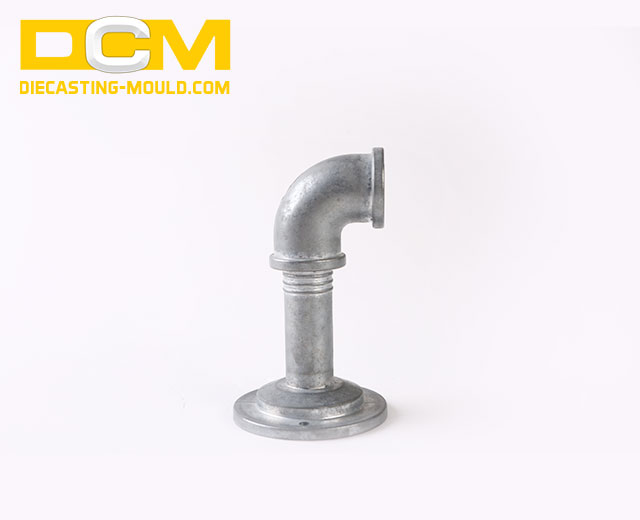
How to ensure precision in custom die casting parts?
Furthermore, the die casting machine and its operational parameters are central to maintaining precision. Modern die casting machines offer sophisticated controls over injection speed, pressure, and cooling cycles. For instance, in the production of an oem die casting alloy led solar lamp shade, precise control over these parameters is essential to achieve the thin walls and complex internal structures required for optimal thermal management and aesthetics. Consistent pressure throughout the injection phase prevents voids and ensures a uniform density, crucial for the structural integrity of the custom die casting parts.
Quality control measures implemented throughout the manufacturing process are non-negotiable for ensuring precision. This includes in-process inspections using advanced metrology equipment like CMM (Coordinate Measuring Machine) systems to verify dimensional accuracy. Post-casting, techniques such as X-ray inspection can detect internal defects like porosity or inclusions that are not visible externally. Statistical process control (SPC) methods are also employed to monitor variations and make real-time adjustments, preventing the production of out-of-spec custom die casting parts.
Ultimately, achieving consistent precision in custom die casting parts is a holistic endeavor. It requires a synergy between expert design, appropriate material selection, state-of-the-art machinery, and unwavering commitment to quality assurance. By focusing on these interconnected elements, manufacturers can consistently deliver die cast components that meet the exact specifications and performance demands of the most challenging applications.